
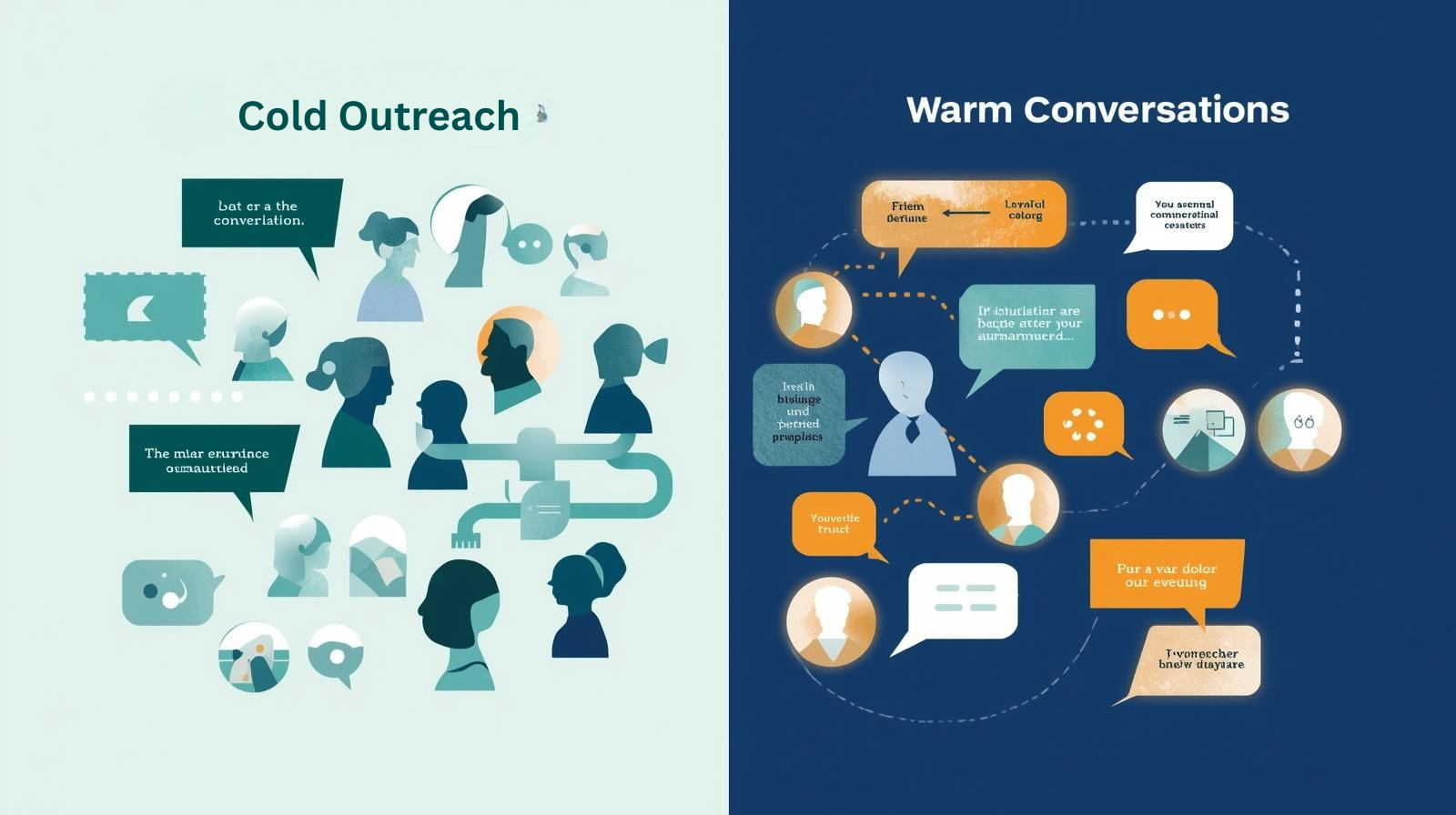
The era of “spray and pray” outreach is not merely declining; it has effectively collapsed under the weight of its own noise. In 2026, the average B2B decision-maker is inundated with hundreds of automated LinkedIn invitations and AI-generated emails every week. When every message feels like it was spat out by a machine, the most radical thing a brand can do is sound like a human. Transitioning from cold outreach to warm conversation requires a fundamental shift in objective: moving away from “securing a meeting” and toward “starting a dialogue.” Success today is measured not by the volume of sent messages, but by the depth of the resulting engagement.
Shifting your focus to conversation rather than conversion actually improves your long-term conversion rates. By lowering the pressure of the initial touchpoint, you reduce prospect defensiveness and build a foundation of rapport that makes future sales discussions much smoother.
The “Pattern Interrupt”: Breaking the Automation Stigma
The human brain is remarkably adept at filtering out repetitive stimuli. When a prospect sees a LinkedIn message starting with “I hope this finds you well” or “I noticed your impressive background,“ their internal “spam filter” immediately triggers a delete response. To move from cold to warm, you must employ a “pattern interrupt” something that signals to the recipient that a living, breathing person actually researched their specific situation. This could be a reference to a specific comment they made on a niche podcast, a shared challenge unique to their specific local market, or even a respectful disagreement with a recent post they shared.
Spend the first two sentences of your outreach proving you are human. Avoid generic compliments; instead, mention a specific detail that an automated bot would likely miss. Authenticity is the only currency that buys a prospect’s attention in a crowded inbox.
The Power of the “Micro-Ask”
One of the most common mistakes in B2B outreach is the “Macro-Ask” requesting a 30-minute discovery call in the very first message. This is the professional equivalent of asking for a marriage proposal on a first date. It creates immediate friction because the “cost” of the interaction (30 minutes of a busy executive’s time) far outweighs the perceived “value.” Instead, humanized campaigns utilize the “Micro-Ask.” This is a low-friction question designed to spark a reply rather than a commitment, such as: “Are you currently prioritizing [X] or [Y] this quarter?” or “Would you be open to a 30-second video explaining how we solved [Specific Problem]?”
Aim for a “Reply Rate” rather than a “Booked Meeting Rate” as your primary KPI for initial outreach. Once a prospect replies even with a simple answer, the “cold” barrier is broken, and you have entered into a voluntary conversation.
Leveraging Video: The Ultimate Humanizer
Text is inherently cold; it lacks tone, facial expression, and warmth. In 2026, personalized video has become the bridge between a cold digital message and a warm human connection. A 45-second video recorded specifically for a prospect where you mention their name and perhaps showing their website in the background is nearly impossible to ignore. It conveys a level of effort and intentionality that text cannot match. More importantly, it allows the prospect to “meet” you before they ever agree to a call, significantly reducing the perceived risk of the interaction.
You don’t need a high-end studio for this. In fact, “low-fi” videos recorded on a webcam or phone often feel more authentic and less like a polished commercial. Keep it brief, keep it personal, and always include a clear, low-pressure next step.
The Multi-Channel “Surround Sound” Strategy
Warm conversations rarely happen in a vacuum. A humanized approach involves a “surround sound” strategy where you engage with a prospect’s content before you ever send a direct message. This involves liking their posts, leaving insightful (not flattery-based) comments on their articles, and perhaps sharing their content with your own network. By the time your LinkedIn message or email arrives, your name is already familiar. You are no longer a stranger “pitching” them; you are a familiar face in their professional community initiating a deeper discussion.
Set a “Rule of Three” before sending a cold message: engage with three pieces of their content over the span of a week. This pre-outreach engagement warms the lead and significantly increases the likelihood that your direct message will be opened and answered.
Conclusion: Trading Scalability for Soul
The paradox of modern B2B outreach is that the less “scalable” an activity feels, the better it usually works. While AI can help us research and draft, the “soul” of the conversation, the empathy, the nuance, and the genuine curiosity must come from the human behind the screen. By moving away from rigid scripts and toward authentic dialogue, you stop being a vendor fighting for a minute of time and start being a peer offering a moment of value.
In a world of automated noise, the person who listens the best wins the most. Focus on asking better questions, and the “warm conversations” will naturally evolve into “closed deals.”