
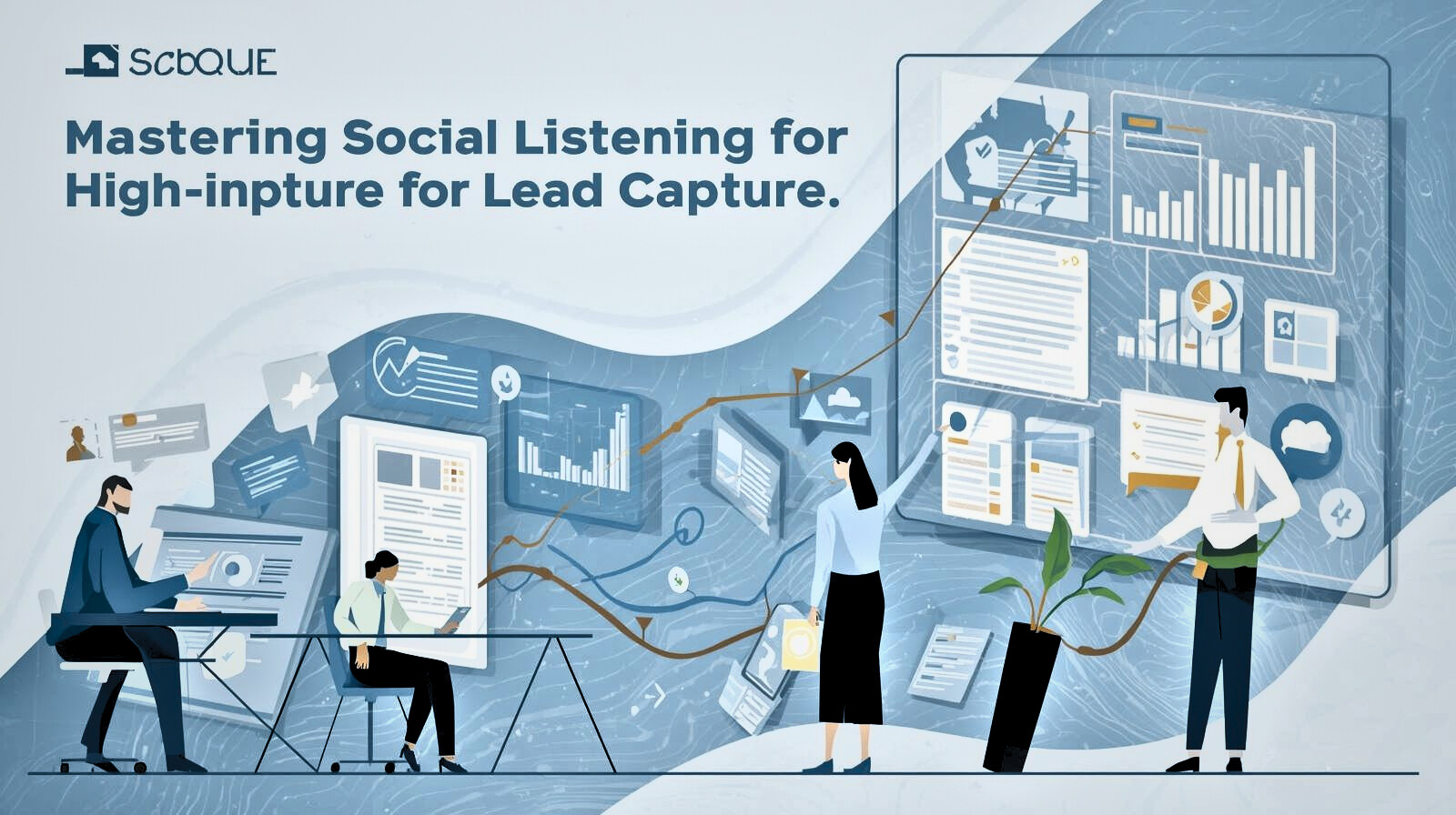
In the traditional theater of lead generation, the dominant strategy has long been “broadcasting,” shouting a message through various channels and hoping it resonates with a captive audience. However, as digital noise reaches a fever pitch, the most effective lead generation teams are shifting their focus from talking to listening. Social Listening is the strategic practice of monitoring online conversations to identify “Buying Intent” in real-time. It is the digital equivalent of standing in a crowded room and waiting for someone to say, “I have a problem that I don’t know how to solve.” By moving from a proactive “push” to a receptive “pull,” you ensure that your first interaction with a prospect is not an interruption, but a timely intervention.
Social listening allows you to bypass the “Cold” stage of outreach entirely. By engaging only when a prospect has voiced a need, you enter the conversation as a helpful advisor rather than a cold-calling intruder, which dramatically increases your conversion-to-meeting ratio.
Detecting the Signal: The Art of Intent-Based Monitoring
The core of a successful social listening strategy lies in the selection of keywords. Most companies limit their monitoring to their own brand name, essentially using social listening as a customer service tool. To use it for lead generation, you must expand your “Digital Ear” to include industry pain points, specific product categories, and “Intent Phrases” such as “Can anyone recommend…” or “Does anyone know a better way to…” This allows you to identify prospects at the exact moment they are seeking a solution.Tthe goal is to find high-value prospects and understand their context before you type a single word.
Create a “Keyword Hierarchy” that prioritizes “I-need-help” phrases over generic industry terms. Monitoring specific technical questions related to your niche allows your team to provide “Radical Utility” by answering the question directly on the public feed, establishing authority before a lead form is ever filled.
Exploiting Competitor Friction: The Displacement Strategy
One of the most fertile grounds for social listening is the “Unsatisfied Competitor Customer.” By monitoring mentions of your competitors’ brand names alongside negative sentiment keywords (e.g., “frustrated,” “buggy,” “too expensive”), you can identify leads who are actively looking for an exit. This is the ultimate “displacement” opportunity. When you spot a prospect complaining about a competitor’s lack of a specific feature, your outreach can be surgically precise: “I saw you were struggling with X feature, we actually built our tool specifically to solve that problem. Happy to show you how.”
This strategy turns your competitors’ weaknesses into your lead generation strengths. It allows you to strike when the prospect’s “Pain Point” is acute and their loyalty to their current vendor is at its lowest point.
The “Humanized” Response: Avoiding the Bot Trap
The fastest way to fail at social listening is to automate your responses. In a landscape where prospects are increasingly distrustful of AI-generated generic replies, the “Human Touch” is your greatest competitive advantage. When a lead is captured through social listening, the response must be hyper-personalized and context-aware. If someone asks for a tool recommendation on Reddit or LinkedIn, a link to your homepage is a “Gimmick.” A thoughtful reply that summarizes why your tool fits their specific described use case and perhaps offers a free, ungated audit is a “Professional Service.”
Follow the “Value-First” rule of engagement: Your first reply should never be a sales pitch. Aim to solve 10% of their problem in the comment or tweet itself. This builds immediate “Social Proof” among other people reading the thread, turning one single lead into a magnet for many.
Operationalizing the Ear: Integrating Listening into the Lead Gen Team
For social listening to scale, it cannot be a side project for a busy marketing manager; it must be a core function of the lead generation assembly line. As outlined in the Building a Lead Generation Team framework, the SDRs (Sales Development Representatives) should be equipped with listening dashboards (like Brandwatch, Mention, or Hootsuite) that feed directly into the CRM. When a relevant conversation is flagged, it should be treated as a “High-Priority Lead,” triggering an immediate, high-fidelity response. This ensures that the window of opportunity, which is often only open for a few hours is never missed.
Use social listening to “Warm Up” your Outbound leads. If you see a target prospect post about an industry trend, “Like” and “Comment” on their post 24 hours before you send them a personalized email. This creates a “Pattern of Familiarity” that makes your direct outreach feel like a continuation of a digital relationship.
Conclusion: The Quietest Voice Often Wins
Ultimately, social listening is the ultimate form of market research conducted in real-time. It allows you to stop guessing what your prospects care about and start responding to what they are actually saying. By positioning your brand as the “Helpful Observer” who arrives at the perfect moment with the perfect solution, you build a lead generation engine rooted in empathy and timing. In the high-stakes world of B2B, the company that listens the best is usually the one that sells the most.
You have two ears and one mouth; your lead generation strategy should follow that same ratio. Focus on receiving signals of intent, and your “broadcasts” will become exponentially more effective because they are finally relevant.